In recent years, Long Island has taken steps to strengthen and diversify its economy—a shift accelerated by the growth in the number of residents working from home post-pandemic. But while state and local officials have worked to boost emerging industries such as biotech and renewable energy, invest in local downtowns, and spur tourist visitation, few factors have contributed more to Long Island’s economic vitality than its vibrant arts and culture sector.
Employment in Long Island’s arts and culture sector surged 21.6 percent from 2014 to 2024, over five times the overall rate of job growth in the region (4.1 percent).1 During a decade in which Long Island’s under-65 population declined by 1 percent, the number of independent artists nearly doubled, from 1,760 in 2014 to 3,179 in 2024.
With little fanfare and even less public investment, Long Island’s arts organizations and working artists are creating the conditions for thriving communities from Hempstead to the Hamptons, revitalizing downtowns, boosting tourism, attracting and retaining young professionals and families, and sparking the growth of local restaurants, coffee shops, and craft-based businesses. This impact includes and goes beyond the more than $330 million in economic activity generated by Long Island’s nonprofit arts and culture organizations each year—an impressive figure that nevertheless falls far short of capturing the full impact of the arts across Long Island.
Despite the growing power of the arts as a catalyst for economic vitality, Long Island’s cultural sector faces several significant challenges. The skyrocketing cost of living places intense strains on workers in Long Island’s arts and culture sector, who earn on average about $46,500 annually—about half the region’s average salary.2 Organizations that support the arts, including arts councils and other arts services organizations, are seriously under-resourced, with many operating with barely more than a month’s worth of expenses in reserve.
Public funding has been far too limited to keep pace with growing needs, leading to missed opportunities. Long Island makes up 14.7 percent of the state’s population but receives only 2.8 percent ($2.5 million) of the grants made by the New York State Council on the Arts—and just 0.8 percent of direct artist grants statewide went to Long Island artists.3 Less than 1 percent of National Endowment for the Arts funding in New York goes to Long Island, and funding levels have declined precipitously over the past two decades.
Likewise, while Long Island’s arts sector is a major catalyst for economic opportunity, the state’s economic development investments on Long Island too rarely flow to the arts. Last year, the state’s Regional Economic Development Councils allocated 16 percent of grant funding to arts and culture–related projects statewide, a record high. But just 3.1 percent of Long Island’s REDC funding supported arts and culture projects.4
State, county, and local policymakers have no shortage of needs when it comes to strengthening Long Island’s economy for the long term, starting with tackling the region’s pervasive housing crisis. But when it comes to supporting local economic vitality, strengthening communities, and attracting and retaining young people and families, few facets of Long Island present more upside potential than the growth of the arts. To build on these strengths, policymakers will need to fully integrate the arts into Long Island’s economic development and tourism strategies; dramatically increase public investment at the state and county levels; tackle the affordability crisis facing artists and arts workers; and tap the power of the arts to strengthen communities and solve public challenges. This includes launching a Long Island Grant Academy to help local artists access funding, dedicating 1 percent of county budgets to the creative sector, allocating a portion of hotel taxes in Nassau County to create a new Arts Development Fund, and embedding artists in local government to imagine creative solutions.
Sustaining Long Island’s Creative Spark is a joint project of the Center for an Urban Future, an independent think tank, and the Long Island Arts Alliance. The report demonstrates the role of the arts as a catalyst for economic vitality across Long Island, details the top challenges that arts organizations and artists face, and advances policy recommendations that will help create a stronger and more inclusive Long Island by better leveraging the power of the arts.
This report is informed by more than 30 interviews with artists, arts services organizations, businesses organizations, small business owners, and leaders of cultural organizations including museums and performance venues. Interviewees, including those who work in sectors outside of the arts, were all but unanimous in the conviction that the creative sector is an increasingly valuable economic catalyst on Long Island, and that with sufficient investment from public officials and private grantmakers, the arts can be more fully integrated into a long-term strategy to cultivate a more vibrant and inclusive Long Island.
The arts are a powerful and growing economic engine for Long Island.
“Our strong diverse arts sector on Long Island is part of what makes our region such a great place to live and is one of the defining characteristics of the Long Island experience,” says Stacey Sikes, former vice president of government affairs and communications at the Long Island Association, which represents hundreds of businesses across Long Island. “When we talk about what makes Long Island great, we talk about our great schools, our great health care, that we have safe communities, that every community has its own character. We have the ocean on the South Shore, we have the Sound on the North Shore, and we also have really dynamic arts and cultural institutions.”
Over the past decade, Long Island has seen modest employment growth, with total jobs up 4.1 percent. During that same period, employment in the arts and culture sector boomed, increasing 21.6 percent (from 6,770 jobs to 8,231 jobs). This growth has had a major ripple effect in other industries across Long Island, contributing to downtown revitalization, small business development, and the growth of Long Island’s tourism economy. And the arts has helped spark Long Island’s economic recovery from the COVID-19 pandemic, with arts and culture employment increasing 5.1 percent above pre-pandemic levels.
Long Island has seen strong job growth in several parts of the arts sector, including fine arts schools, theater companies, and museums, but the greatest growth by far comes from the growth in the number of individual artists working on Long Island. The number of independent artists, writers, and performers working on Long Island nearly doubled since 2014, with significant growth occurring since the pandemic.
Similarly, the number of resident artists and design workers—meaning artists who live on Long Island but work anywhere—has grown. Long Island’s population of craft and fine artists grew by 36.9 percent and 15.6 percent, respectively, over the past decade. The design fields have also seen strong growth, with the number of merchandise displayers and window trimmers doubling and the number of interior designers rising by 32.1 percent. Overall, Long Island’s resident artist and design worker population grew 3.4 percent over the past decade, from 10,201 to 10,547 workers, faster than the overall population.
The number of arts institutions and schools responsible for some of this hiring is large and growing. The region boasts hundreds of museums,5 dozens of theaters6 and historical societies,7 and 20 institutions of arts education,8 alongside DIY punk venues like The Cave in Medford, community-focused cultural centers like Teatro Yerbabruja and Ma’s House, and a growing constellation of artist collectives, smaller music venues, artist workspaces, and nonprofit arts centers.
This includes bustling educational and cultural hubs like the Long Island Children’s Museum, which is serving 320,000 children annually, more visitors than any time in its 30-year history, and generating an estimated $18 million of economic activity for the region each year. Guild Hall, the museum, performing arts, and education center in East Hampton, generates $24.5 million in annual economic activity. The arts also produce significant economic benefits from events, such as the Huntington Arts Council’s summer concert series, which adds $5 million to the local economy over just a few months, in part by sustaining more than 57 jobs, and the Islip Council of the Arts blockbuster philharmonic concert at Heckscher State Park—suspended during the pandemic but revived this year with 10,000 people in attendance.
As cultural activity has flourished, so have efforts to measure its impact and importance. Long Island Arts Alliance compiled data for Americans for the Arts’s national Arts & Economic Prosperity (AEP) survey, and found that the nonprofit arts sector generated $330 million in economic activity across Long Island in 2022—$178 million in spending by arts and culture organizations and an additional $152 million in event-related expenditures by their audiences. That economic activity supported 4,905 jobs, provided $235 million in personal income to residents, and generated $81 million in tax revenue to local, state, and federal governments.9
All of this activity has helped make Long Island a place where creative professionals live and work, audiences flock to first-rate theaters and museums, and local restaurant owners post concert schedules in their kitchens and stock rooms to plan their staffing.
“While preparing for the AEP survey, I identified nearly 500 nonprofit organizations on Long Island with the arts embedded in their programming, a number that truly surprised me,” says Lauren Wagner, executive director of the Long Island Arts Alliance. “Long Island has the second-largest arts and culture sector in the state, after New York City. The creative economy is already generating significant activity and prosperity. We’re not building potential, it’s already here. The challenge now is ensuring it receives the recognition and support it’s earned.”
The arts are creating the conditions for small businesses to thrive.
Across Long Island, the arts and culture sector plays a large and growing role in boosting local economic vitality. Arts and cultural venues, festivals, and other cultural attractions have become an increasingly important catalyst for increased patronage and spending at small businesses, according to business owners across Nassau and Suffolk Counties. At the same time, the growing presence of artists and creative workers on Long Island is strengthening the economy in other ways—bolstering the region’s ability to retain younger people, sparking year-round and evening activity in formerly quiet downtowns, and celebrating Long Island’s diversity of cultures, thought, and ideas for the region’s future.
In towns across Long Island, business owners say that the arts has quietly become a key to their success, bringing in customers, boosting revenues and hiring, and creating a sense of community that inspires locals and visitors alike.
In Port Jefferson, the two-day Charles Dickens Festival organized by the Greater Port Jefferson/Northern Brookhaven Arts Council unfolds at indoor and outdoor venues with 130 volunteers playing street characters in Victorian costumes. It’s a delightful spectacle that draws visitors from around the country and world—and helps local businesses make ends meet. “It’s been voted the best festival on Long Island five years in a row,” said council chairman Alan Varela. “We average 25,000 people. Small businesses in Port Jefferson tell me it’s their busiest weekend of the year. Some say it generates enough sales to pay two or three months of their expenses.”
Alison Turner, a manager at Old Fields restaurant in downtown Port Jefferson, confirmed that Dickens is a boon for business. “The festival definitely helps with profits,” she says. “All weekend, the people keep coming to Port Jefferson: new customers, people who aren’t usually here. It speeds up the dining and the tables turn over faster. With shows nearby, you’re filling a seat on Saturday at 5 o’clock, which you don't normally see. You get a full restaurant.”
Turner added that Old Fields also benefits from Theater Three around the corner. “They have a popular comedy show and other programming for kids with special needs. Younger children and families come into the restaurant, larger groups, and when they arrive they tell you, ‘We’re going to a show!’”
Maryanne Loo, the owner of Haiku Sushi in Riverhead, says that the Suffolk, an Art Deco theater built in the 1920s, has become a crucial economic catalyst over the past decade, drawing patrons and contributing to a far more bustling downtown. The theater was dark and empty for more than 20 years, before finally reopening to the public in 2013.
“On Thursday, Friday and Saturday, the customers start arriving between 5:30 and 7:30. They just have to walk down the block to see the show,” says Loo. “We’ve been here 16 years and we’re starting to see more life come to downtown Riverhead. There’s more foot traffic, so now we’re staying open till 10 p.m. It’s the same on the weekends, when a lot of kids go with their parents to the Long Island Aquarium. That’s good for a place like Snowflake, an ice cream store a mile down the road that’s been around since the 1920s.”
The story is the same at 1770 House, a restaurant in East Hampton across the street from Guild Hall, which reopened in early 2024 after a two-year renovation. A manager there, who requested anonymity in order to speak candidly, says that Guild Hall’s closure was a kind of natural experiment that proved its worth to 1770 House.
“We noticed a drop-off when they closed for renovations and all I can say is, ‘Thank goodness they’re back up and running.’ This year, there’s been a big jump in customers being more flexible in their eating times in order to accommodate a show. That’s hugely helpful. We’ve done little jigs of joy.” The manager says she hires more staff when Guild Hall has an event, which sometimes is five nights a week, and that they were at capacity all summer in 2024.
Long Island’s cultural communities also proved their incalculable value to the region’s local economies during the COVID-19 pandemic. In towns across Long Island, local arts organizations produced outdoor events, hired artists to create murals and other public artworks, and launched new programs designed to encourage locals to explore their own communities.
In Patchogue, the Patchogue Arts Council launched MoCA L.I.ghts in the winter of 2020, transforming the village into Long Island’s only immersive, open-air light projection museum. The inaugural festival succeeded in drawing hundreds of people out to the streets of downtown Patchogue during the dark first COVID winter, bringing much-needed joy to locals and a spark commerce. The event has now grown into a major annual festival, attracting thousands of visitors and showcasing work by more than 100 artists.
In Babylon, Liz Mirarchi of the Babylon Citizens Council on the Arts (BACCA) partnered with local businesses during the COVID-19 pandemic to install small art exhibitions in six cafes that functioned as a cultural walking tour. “Artists were able to sell their work,” she says. “And it helped bring new people into those cafes. We know based on feedback that some of them became regulars, and they told their friends.”
Long Island’s arts and culture sector has become a vital showcase of the region’s growing diversity, strengthening connections and keeping more dollars in the community.
Long Island has rapidly become more diverse over the past decade, as has its arts communities, including artists, arts organizations, and audiences. Black, Hispanic and Asian residents now comprise 38.1 percent of the population, up from 22.5 percent in 2012.10 Artists and arts organizations are not only contributing to Long Island’s diversity, they are showcasing it as a core strength. Artists are rendering visible cultures and communities that have too often gone overlooked or undervalued, helping to build understanding and create a sense of belonging among Long Islanders who might otherwise feel marginalized. Likewise, some arts organizations have taken important steps over the past decade to create more diverse and representative programming—strengthening their communities and growing their audiences in the process.
Ma's House & BIPOC Art Studio, founded in 2021, is the first communal arts space on the Shinnecock Reservation in Suffolk County. Founder Jeremy Dennis, a photographer and member of the Shinnecock Indian Nation, says its residency program hosts 114 resident artists of color each year, and other cultural organizations are invited to guest curate shows at its art gallery. “The current show has 27 artists—and more like 200 people from the community, if you count singing and dancing,” says Dennis. The list of collaborators includes The Southampton African-American Museum, the Eastville Historical Association, and The Sands Community, a historically Black summer town.
Artist Anu Annam has a studio in Huntington Station, and is an arts educator who has received several teaching grants from the New York State Council on the Arts. They are a member of the BIPOC Queer Long Island community and lead SEA of Visibility, an arts-based organization designed to fight stigma against mental illness. They say that Long Island’s artists play a critical role in helping young people experience safety and belonging, even when societal forces make them feel like they don’t fit in.
"I teach many teens and students. Long Island can be a place that lives in the past,” Amman says. “If you're of color, or if you're queer, you can experience segregation in different ways. Some people leave Long Island after high school and then stay away because of bad experiences they had here. The reason I work here is so these students will have a teacher who makes them feel better when they feel isolated and bullied. We don't want that. We want more young people to feel like they want to stay here."
Marcia Odle-McNair, an artist and member of Westbury Arts and the Long Island Black Artist Association, says that Long Island’s artists are creating an environment where people want to live, visit, and patronize local businesses, and contribute to clusters of cultural and economic activity that help communities thrive.
“We decorate storefronts in eye-catching and attractive ways. We install murals and sculptures and play music to create an artistic vibe in places where people then want to gather. There’s a movement of money and ideas, which supports a healthy economy and community. We keep Long Island dollars on Long Island,” she says.
In addition, Long Island’s larger cultural institutions are working to diversify their programming to more accurately and fully include artists of color, immigrant groups, and other historically marginalized people. The Long Island Museum hosted a groundbreaking exhibition, Somos/We Are, which celebrated the artistic contributions of the Latinx community of Long Island and included works by more than 80 artists. In response to the newest wave of immigrants to Long Island, the Long Island Children’s Museum has added multilingual programming for children and parents, including a creative-arts-based pre-K program with instructors who speak Spanish, Haitian Creole, and Mandarin.
Challenges Facing the Arts Sector Across Long Island
1. Public investment in Long Island’s arts sector is chronically lacking.
Despite the outsized impact of the arts across Long Island, funding at every level of government has struggled to keep pace with growing needs and opportunities. Long Island makes up 14.8 percent of the state’s population, but in FY 2025 received just 2.8 percent ($2.5 million) of the funding allocated by the New York State Council on the Arts (NYSCA) to artists, arts organizations and arts-serving organizations. This state funding is all the more vital, given that Long Island received just 0.7 percent ($135,000) of the state’s funding from the National Endowment for the Arts last year.
Over the past decade, Long Island has grown to become the region with the largest resident artist population outside of New York City, and with the second-highest arts and culture employment, after the Mid-Hudson Region. But Long Island is ranked seventh out of ten regions by total NYSCA funding. For instance, last year Long Island received less grant funding from NYSCA than did the Southern Tier, even though Long Island is home to five times more arts and culture jobs and ten times more resident artists.
And while the state has begun to allocate more grant funding through the Regional Economic Development Councils toward arts and culture projects over the past year, Long Island continues to lag. Statewide, 16 percent of REDC funding in the last round went to arts-related projects, a record high. However, just 3.1 percent of Long Island’s funding in that round supported arts-related projects. Of the $775,000 in REDC grants, $500,000 went to the publicly owned Suffolk County Vanderbilt Museum to restore its boathouse.
The state focuses on the city and other cities and leaves Long Island out,” says Bryan DeLuca, the executive director of the Long Island Aquarium, head of East End Tourism Alliance, and co-founder of Reflections Riverhead, an outdoor art park, which he helped found and create. “It is difficult to apply for grants when every application or award is going to the boroughs. Artists feel defeated to apply.”
Lauren Wagner of the Long Island Arts Alliance says that part of the challenge is that the number of artists and arts organizations applying for public funding from Long Island is too low, only representing a fraction of the artists and organizations in the region. In part, research for this report suggests that a negative-feedback cycle is occurring: Long Island has long been underrepresented in terms of public funding for the arts, which leads artists and arts organizations to conclude that these grants are not winnable, which contributes to lower levels of participation in the application process, which perpetuates lower funding levels.
Several artists said that temporary funding during the COVID-19 pandemic was sorely needed, including federal COVID relief funding and grants from Creatives Rebuild New York that employed artists in local organizations and provided others with a basic monthly income. These programs contributed to a burst of artistic activity and reduced financial insecurity. But those pandemic-era programs have ended, and neither policymakers nor philanthropy has so far committed to sustaining them.
2. Long Island’s high cost of living and dispersed artist population is hard on independent artists, and on arts and cultural organizations trying to recruit and retain staff.
Among the dozens of cultural leaders and working artists interviewed for this report, most cited Long Island’s high cost of living as a major obstacle to a vibrant creative sector.
The average annual earnings on Long Island is $89,800, compared to $46,500 in the arts and culture sector—about 48 percent lower. At the same time, housing costs have skyrocketed, increasing 66 percent since 2013, squeezing arts workers and artists particularly hard. As a result, even as Long Island is home to more opportunities for artists and cultural workers than ever, affordability has plummeted. One clear consequence is that arts venues are struggling to hire and retain staff, and artists are considering more affordable options from upstate New York to the Sun Belt and beyond, or relocating to New York City where rents can be comparable and the opportunities are greater.
Artists and arts leaders say that these affordability challenges are already visible in the data on the performing arts. While the arts and culture sector has grown significantly over the past decade, performers have notably struggled since the pandemic, with the total number of Long Island-based actors, dancers, and musicians remaining 13.2 percent below the 2019 level.11 Faced with unstable incomes and rising costs of living, performers are increasingly finding that living on Long Island is no longer sustainable.
Galvin Bisserup, a Freeport photographer, is tired of watching talented young artists leave the area. “They get out of school and relocate outside of Nassau and Suffolk County, then don't return because of the expense of trying to survive and work here,” he says. Many follow the well-trodden trail to New York City, which is not known for affordability, but tends to offer higher-paying jobs and a greater concentration of professional possibilities.
Other leaders emphasized that the lack of affordability also made it challenging for arts nonprofits to hire and retain staff.
“Housing for staff is a problem in the Hamptons,” said Jeremy Dennis of Ma's House & BIPOC Art Studio. “My staff members are renters. It’s hard.”
Erika Floreska of the Long Island Children’s Museum agrees. “Trying to retain a diverse, capable staff is tough. Long Island is an expensive place to live: the taxes are crazy, the housing is insane, and the cost of living keeps going up,” she says.
Long Island is not only competing with other more affordable areas with burgeoning art scenes, but also with the region’s biggest stage: New York City. Andrea Grover of Guild Hall says that soaring costs on Long Island have made New York City more appealing, given the concentration of paid opportunities there. “The big difference with New York City is that artists can find many more jobs in the arts there than out here, where it’s a lot harder to find consistent work,” she says.
A majority of artists interviewed for this report say that while tackling Long Island’s housing crisis will require major policy changes and new investments, there are additional challenges that policymakers should help address to bolster the arts. Most say there’s an urgent need on Long Island for affordable housing, including housing for artists in general and low-income artists in particular. Several artists also cite the need for communal studio space—preferably clustered among Long Island’s many cultural hubs. Artists say the distance between towns can defeat efforts to create communities of artists who feed off each other’s creativity, but that more support for artist workspace can help.
"Long Island's single family home model keeps artists like me in isolation,” says artist Marcia Odle-McNair. “I used to have to go into the city, but now I've found some good art spaces on Long Island. I have to drive 45 minutes to get there, but I do it. We need to consider subsidized housing, transit-oriented workspace, affordable housing through rental and homeowner pathways, and studio spaces."
3. Nonprofit arts organizations struggle to meet their operating expenses, even as their impact grows.
Even as Long Island’s arts and culture sector has grown, rising costs and limited public funding have created significant fiscal challenges for the region’s nonprofit arts organizations, including presenting organizations and arts services organizations. A striking number of organizations say they are operating on a month-to-month basis with few if any reserves, making it all but impossible to raise wages. Many are struggling to afford basic operating expenses, including staff, rent, insurance, and utilities, even as their public programs are seeing larger audiences and greater impact.
Beth Giacummo, executive director of the Museum of Contemporary Arts (MOCA) and Patchogue Arts Council, says that presenting organizations across Long Island face an alarming financial picture, even as funders and the public continue to support their programming. “Lots of funders want to support a specific program or event, but very few want to help us support our staff—that’s the biggest problem,” she says. “I will admit that we fight to survive from month to month.”
Jeremy Dennis of Ma's House & BIPOC Art Studio faces a similar challenge, adding that while some funders can be convinced to support a new endeavor, recurring annual support is difficult to secure. “We had huge support in the beginning,” he says. “But it’s been hard to keep going.” He adds that he keeps operating costs as low as possible by depending on volunteers to scrape by. “Most other art spaces have hundreds of thousands in their budgets and endowments but we don’t,” he says.
Liz Mirarchi of Babylon Arts, which has just two full-time employees, says that reliance on volunteers is endemic across Long Island, and makes organizations more vulnerable. “I think I could speak for many organizations on Long Island when I say we’re mainly powered by volunteers,” she says. “We have a great need for general operating support—funding for utilities and staffing, specifically.”
Erika Floreska is in charge of the Long Island Children’s Museum’s annual budget of $6.4 million. Of that budget, two-thirds goes to paying the museum’s 35 full-time and 100 part-time staff. And yet, only 60 percent of the budget is earned revenue: general admission, school groups, sales from the museum store, and renting the space for events. Forty percent fluctuates and comes from government grants, foundations, individual donors, and an annual gala.
Tom Dunn, artistic and executive director of the Tilles Center for the Performing Arts, a major venue in Nassau County, says he’s feeling the squeeze in the cost of booking the kind of top flight acts that draw a sold-out crowd and help make the venue economically sustainable. “There are exponentially increasing costs to present world class art,” says Dunn. “It costs more than it did pre-pandemic. Top artists are being more selective and charging more.” He said this fee inflation is occurring at the same time that discretionary spending on the arts remains largely flat. “In a sense, I’m also competing with Home Depot. For some people, the question is, ‘Do I buy dinner and tickets to a show…or a lawnmower?’
With success comes the cost of sustaining it. “Putting on MoCA L.I.ghts is twice as expensive as when we started,” says Beth Giacummo, noting that the installation’s initial funding expired after two years. She says the dilemma comes down to the fact that it’s easier to find support for an exciting new program than it is to obtain the donations needed to cover ongoing expenses. This is also true for MoCA’s new building. Giacummo said she’s grateful for the capital funds that allowed her to acquire the building but faces a challenge meeting operating costs: support staff, maintenance, and keeping the lights on.
4. Even as the arts contributes to Long Island’s tourism boom and broader economy, limited tourism revenue flows back into the arts and the arts rarely has a seat at the table.
The arts play a pivotal role in driving tourism on Long Island, offering a vibrant array of attractions and events that draw visitors year-round. The Hamptons International Film Festival in October attracts film buffs from across the globe, while the Parrish Art Museum and the Tilles Center for the Performing Arts showcase world-class exhibitions and performances. Art lovers visit landmarks like the Coltrane House and the Pollock-Krasner House and take in cutting-edge performances at restored Art Deco theaters across Long Island. Weekends come alive with local festivals celebrating music, literature, dance, and cultural traditions. And town centers are increasingly activated with striking public art installations, such as the vibrant murals supported by Huntington Arts Council, turning streets into open-air galleries that draw visitors and foster community pride. Together, these diverse offerings make Long Island a hub for cultural tourism and help contribute to a vital part of the region’s economy.
All of this cultural activity has contributed to Long Island’s tourism boom. Tourism spending on Long Island reached a record $7.5 billion in 2023, more than any region outside of New York City and an 18 percent increase since 2019. Museums, theaters, festival directors and other arts venues say that a significant share of their visitors travel from New York City, other states, and even from overseas—booking hotel rooms, staying longer, and spending more in local shops and restaurants.
But despite the impact of the arts on Long Island’s tourism economy, with additional investment it could be significantly greater—benefiting the arts and local small businesses alike. While tourists spent $600 million on the arts, recreation and entertainment on Long Island last year, that’s just 8 percent of tourist spending in the region, lower than the 10 percent spent statewide or the 12 percent spent in New York City. Boosting the share of tourism spend that flows toward the arts could help strengthen presenting organizations’ bottom lines and in turn foster more of the programming that draws visitors to the region.
One opportunity is to direct more of the dedicated revenues generated in Nassau and Suffolk Counties from overnight hotel stays toward marketing arts and culture.
In 2023, New York State created a potentially powerful tool for bolstering arts and culture on Long Island. It raised the hotel and motel tax rate in Suffolk County from 3 percent to 5.5 percent earmarking the funds for culture projects and providers, tourism and film promotion, and toward a new convention center near MacArthur Airport. Nassau County also collects a 3 percent tax. But interviews and data analysis suggest that support for artists and the promotion of culture is limited.
For instance, the Nassau County Comptroller reports that nearly $5 million from the hotel/motel tax has been spent since 2019. But it doesn’t say who received those funds and for what projects. According to interviews conducted for this report, while local elected officials are sometimes able to secure modest grants for local arts organizations, much of the funding supports county-owned parks, museums, and recreation facilities. While these are worthy recipients, the county is not leveraging these funds to support the vast majority of the county’s arts organizations and there is no public process to apply for these grants.
Sue Lyons of Westbury Arts said State Senator Siela Bynoe helped her organization get a grant from the hotel/motel fund. Lyons is grateful, with a caveat: “It's really kind of odd to me that there isn't an application process. I feel like there are so many other organizations in Nassau County who probably don't even know that this money exists that they could be applying for if there were an application process, but there's not.”
Elevating the arts on Long Island’s tourism agenda could generate multiple benefits, but there is work to do to bridge the gaps that exist between the tourism and arts and culture sectors.
For example, there is just one representative from the arts on the 23-member board of Discover Long Island, which handles destination marketing for Suffolk County. And there are none on the Long Island Association’s 90-plus member board, as well as the board of the Long Island Regional Economic Development Council, which drafted the strategic plan for economic development for Nassau and Suffolk counties. (Both the Long Island Association and the Long Island REDC include leaders of Long Island universities, several of which are home to arts venues.)
Discover Long Island helped drive a record 41.8 million tourists to Long Island in 2023, and its funding from the hotel/motel tax increased from $2 million to $6 million. The organization lists many arts venues and events on its website but says that data shows the arts is a complement to the region’s tourism agenda, rather than a core driver.
“Our biggest drivers for tourism are our beaches, followed by shopping, history, and vineyards,” she says Kristen Reynolds, former president and CEO of Discover Long Island. “Visitors also enjoy the arts and arts facilities in the area—it's an important part of people selecting Long Island, knowing that those types of attractions exist. But the arts are not necessarily the key drivers for a Long Island visitor.”
With additional, sustained investment in marketing Long Island as an arts destination, that could change—injecting millions of new dollars into both the cultural ecosystem and the broader economy. But the arts sector is rarely offered a seat at the table in Long Island’s economic development agenda, limiting both the impact of economic development planning of the arts, and of the arts on Long Island’s long-term economic vitality.
Recommendations: Sustaining Long Island’s Creative Spark
1. Boost state funding and expand access to grants so Long Island gets its fair share. As New York’s arts and culture sector has expanded, state funding simply hasn’t kept pace. Even after three years of incremental increases, the New York State Council on the Arts’ (NYSCA) grantmaking budget remains 35.9 percent below its 1990 level after adjusting for inflation. Meanwhile, Long Island is being left behind: despite having the second-largest population of working artists in the state—after only New York City—the region receives just 2.8 percent of NYSCA funding, less than half the share allocated to the Hudson Valley and Capital Region.
To address this disparity, the state should set a bold but achievable goal of growing NYSCA’s budget to $150 million, enabling support to better reflect the scale and impact of New York’s vibrant cultural sector. At the same time, state and county leaders should invest in building Long Island’s capacity to secure public funding by launching a new Long Island Grant Academy, an initiative that would fund local arts services organizations to help artists and cultural organizations identify and apply for state and local grants. The Academy should be launched with $1 million from Nassau and Suffolk counties, in partnership with local foundations and NYSCA, to provide artists and arts organizations with the tools, training, and support needed to win state, local, and philanthropic arts grants. This would break a decades-long cycle of underinvestment and unlock far more funding than the program would cost to run.
2. Integrate the arts into Long Island’s economic development and tourism strategies. Long Island’s arts and culture sector is a powerful yet underappreciated driver of the region’s economic success. From revitalizing downtowns to drawing visitors from across the globe, the arts are sparking Long Island’s post-pandemic rebound and fueling the growth of small businesses, restaurants, and hospitality. Yet while economic development and tourism marketing efforts command vastly greater public resources, only a fraction of those dollars flow to the artists and cultural institutions generating this impact. As one sign of this mismatch, just 3.1 percent of Long Island’s Regional Economic Development Council (REDC) funding in 2024 supported arts-related projects—well below the statewide average of 16 percent.
To unlock the full potential of the arts as an engine for growth, state and county leaders should commit to fully integrating the arts into Long Island’s economic development and tourism strategies. This should include a county-led effort to boost the share of REDC grants flowing to arts and culture projects, along with other state economic development programs like the Downtown Revitalization Initiative and Market New York. At the same time, the region’s major economic development organizations should bring artists and arts organizations to the table—ensuring they are represented on the boards of the Long Island REDC, Discover Long Island, and the Long Island Association, among others. State and county officials should also ensure that more of the region’s destination marketing funding is directed toward the arts—for instance, by launching campaigns led by local artists to market Long Island’s cultural attractions. Nassau County should also create a new Arts Development Fund, seeded with a portion of the county’s growing hotel and motel tax revenues, to allocate to local artists and organizations through a transparent, competitive process—similar to the omnibus grants available in Suffolk County today.
3. Tackle the affordability crisis for artists and arts workers. Long Island’s soaring cost of living poses an existential threat to its growing creative sector. While the region’s median annual income is $89,800, the average earnings in the arts and culture sector are just $46,500—nearly 50 percent lower. Meanwhile, housing costs have jumped 66 percent since 2013, squeezing arts workers and forcing many to consider relocating to more affordable regions or back to New York City. Even as Long Island has gained artists in recent years, performers—who face the most financial precarity—remain 13 percent below pre-pandemic levels, a stark indicator of the economic pressure on this sector.
To sustain its creative economy—and its future more broadly—Long Island will have to confront its most urgent economic challenge: a lack of affordable housing. This crisis affects residents across the income spectrum, but it hits artists and arts workers especially hard, given that they tend to earn significantly less than the average Long Islander. While building more housing won’t be easy, the region has the space—and a growing imperative—to act. As part of this broader effort, Nassau and Suffolk counties should commit to creating at least 1,000 new units of artist housing and workspace, including a minimum of 500 units of artist preference housing across a range of affordability levels, with priority for low-income artists. These live-work communities can help retain creative talent and deepen the cultural fabric of Long Island’s neighborhoods.
At the same time, county leaders should launch a new initiative to convert underutilized commercial spaces into affordable studios, exhibition spaces, and performance venues—making productive use of persistently high post-pandemic office vacancy rates. Broader affordability investments, including expanded regional transit and childcare access, will also help support the region’s creative workforce. And to address the deepening financial insecurity facing many freelancers and independent workers, Long Island should partner with the state to launch New York’s first portable benefits pilot, helping arts workers access essential supports like health coverage, paid leave, and retirement savings.
4. Dedicate 1 percent of Long Island’s county budgets to the arts. Despite the arts sector’s growing economic and social impact, Nassau and Suffolk Counties invest very little in supporting its continued growth. Together, the counties spend more than $8 billion annually—but outside of maintaining county-owned cultural facilities, only a minuscule share of that funding is directed toward artists, arts organizations, or arts-related initiatives. Meanwhile, Long Island’s creative economy is second in size only to New York City’s and plays a vital role in boosting tourism, revitalizing downtowns, and sustaining thousands of jobs.
To better match investment with impact, county leaders should adopt a goal of allocating 1 percent of their annual budgets to the arts. That would yield approximately $80 million a year—enough to dramatically expand grant funding for local arts organizations, seed new arts programming in underserved communities, and invest in cultural infrastructure across Nassau and Suffolk. Even this modest share of public dollars would represent a transformative shift for the region’s creative sector and help ensure its continued growth for years to come.
5. Partner with Long Island’s artists to build a stronger region. Long Island’s cultural sector is growing—but artists and arts organizations remain largely untapped as partners in addressing broader public challenges. Across the country, cities and counties are launching new initiatives that position the arts as an integral part of civic life—from revitalizing public spaces and improving community health to strengthening civic engagement and reimagining how local government works. Nassau and Suffolk Counties should follow suit by supporting new efforts that embed the arts more fully into the public realm and activate the region’s creative talent in service of Long Island’s future.
This should start with the creation of an artist-in-residence program within county and local government, providing opportunities for artists to work alongside planners, educators, public health leaders, and other civic institutions. Both counties should also develop and adopt a comprehensive public art plan for Long Island, modeled on Erie County’s 2023 Public Art Act, which dedicates 1 percent of eligible capital project budgets to the acquisition and maintenance of public art. A similar initiative on Long Island would help bring more art into public parks, transit stations, downtowns, and civic buildings, while supporting local artists and arts workers. County and municipal leaders should also champion the arts through better regional marketing of Long Island’s many cultural offerings, support for local arts districts, and the launch of new flagship initiatives—such as a Long Island Biennial or regional Culture Week—to celebrate the vibrancy of the region’s diverse creative communities.
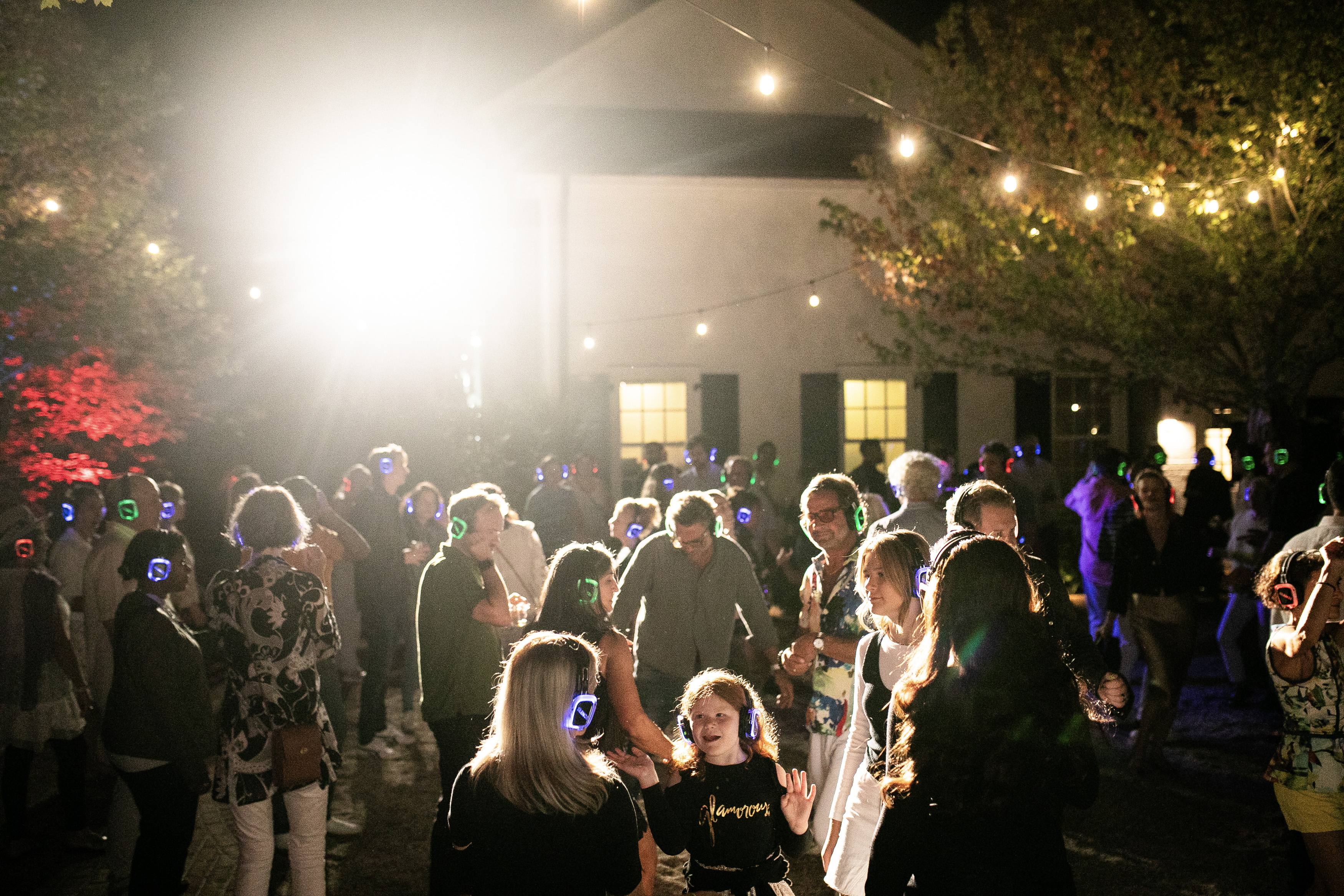 A silent disco at Guild Hall. Photo by Jessica Dalene.
.jpg) Packed screening at Sag Harbor Cinema. Photo by Sam Hamilton.
Packed screening at Sag Harbor Cinema. Photo by Sam Hamilton.
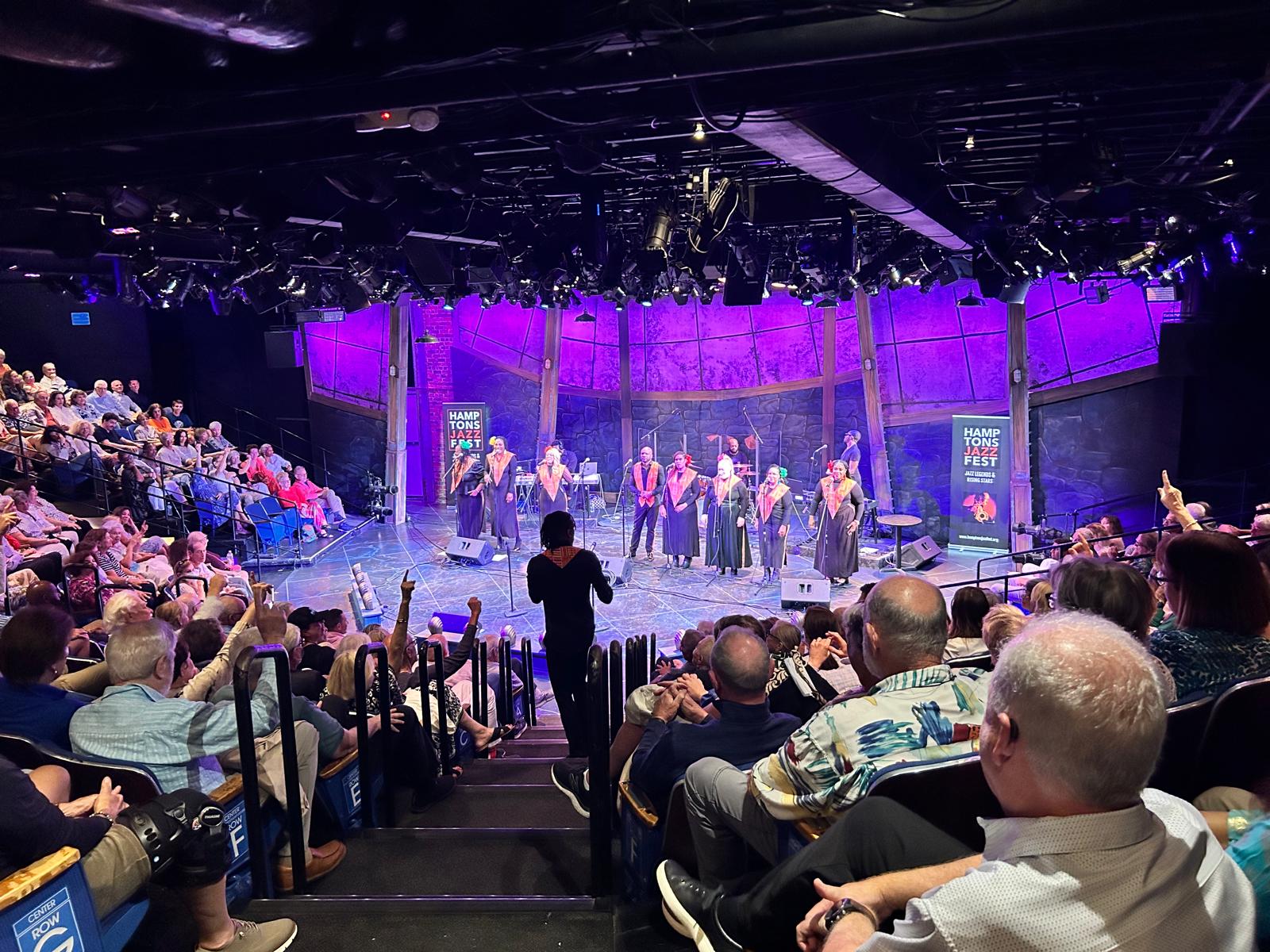 Hamptons Jazz Fest at Bay Street Theater.
.jpg) Srijan Dance Company performs at the Long Island Children's Museum.
Srijan Dance Company performs at the Long Island Children's Museum.
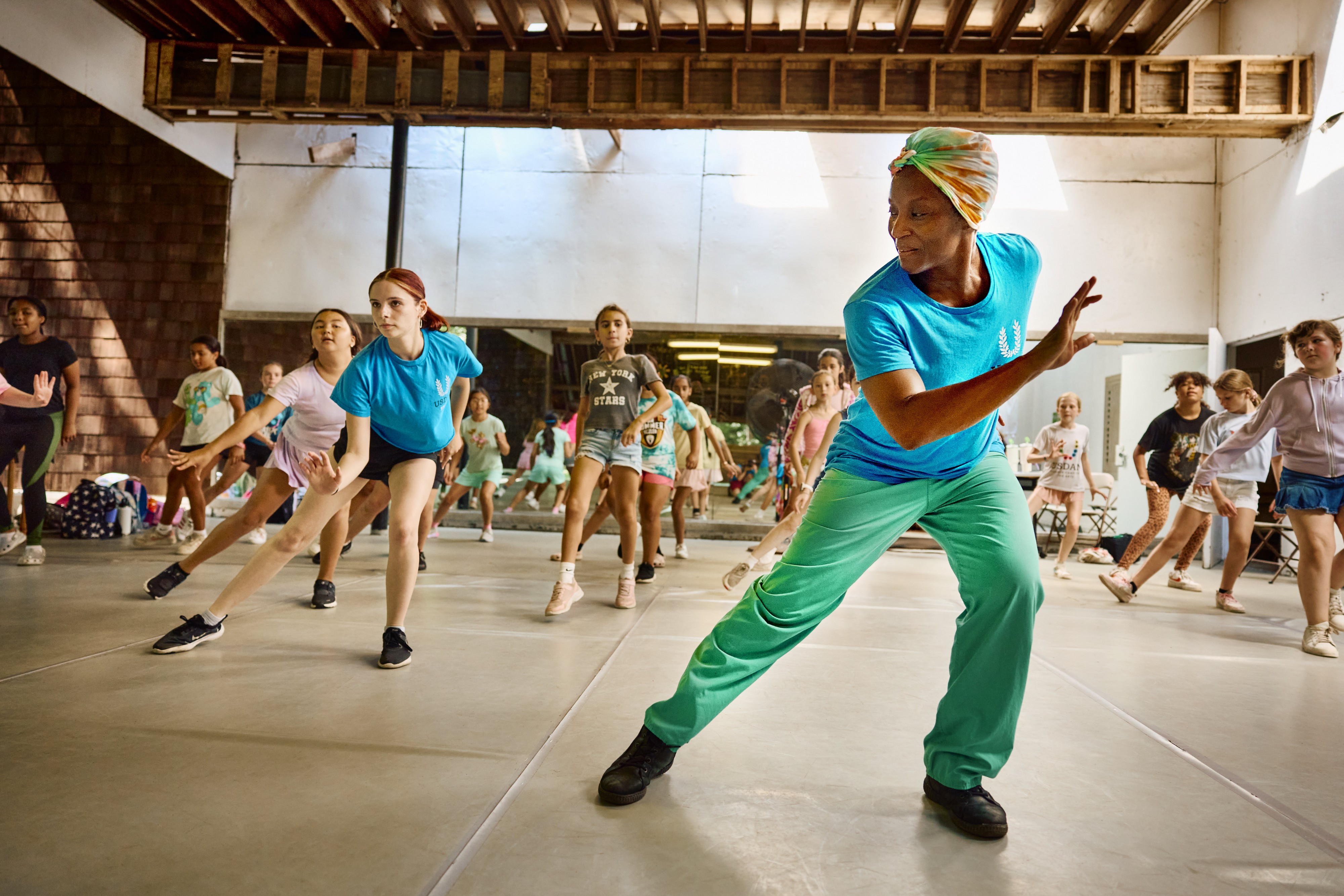 Usdan Summer Camp for the Arts. Photo by Matt Zugale.
Endnotes
1. Center for an Urban Future analysis of data from Lightcast. Accessed May 2025.
2. Ibid.
3. Center for an Urban Future analysis of NYSCA grant data.
4. Center for an Urban Future analysis of REDC grant data.
5. “Long Island Museums,” LongIsland.com, https://www.longisland.com/museums/.
6. “Theaters & Shows,” Discover Long Island, https://www.discoverlongisland.com/things-to-do/arts-culture/theatres-shows/.
7. “Member Directory,” Long Island Historical Societies, https://lihsocieties.org/member-directory.php.
8. “Member Organizations,” Long Island Arts Alliance, https://longislandartsalliance.org/member-directory-3/.
9. “TOP AEP6 TAKEAWAYS for Long Island,” Arts & Economic Prosperity 6, https://longislandartsalliance.org/wp-content/uploads/2024/02/2024TOP-AEP6-TAKEAWAYS-
on-Long-Island.pdf.
10. “Our Changing Population: Suffolk County, New York,” USA FACTS, https://usafacts.org/data/topics/people-society/population-and-demographics/our-
changing-population/state/new-york/county/suffolk-county/.
11. Long Island Creative Spark data.